

A hit-and-run accident leaves you in a situation you never saw coming. One moment, you’re on your way to work or heading home from a late errand. The next, another vehicle strikes yours, and the hit-and-run driver speeds off without stopping. You’re left with pain, damage to your car, and a rush of questions about what comes next.
You may not know how severe your injuries are yet, whether your auto insurance policy will cover the property damage, or how to move forward when the other driver disappeared. That shock is real, and many North Hollywood residents face the same moment of uncertainty after a sudden crash on Lankershim, Magnolia, or the 170.
Taking the right steps at the accident scene and in the hours that follow protects your safety and strengthens your insurance claim. California law requires specific actions after motor vehicle collisions, and those steps become even more important when the at-fault driver flees. This blog explains what to do in a hit-and-run accident in North Hollywood and how California law applies to these cases.
At a Glance
- Check for injuries and move to the nearest safe location.
- Call law enforcement so officers can search for eyewitness accounts, traffic cameras, or a license plate number.
- Document the accident scene with photos, videos, notes, and details about the hit-and-run driver’s direction of travel.
- Seek medical care promptly to support claims for bodily injury, medical expenses, and lost income.
- Notify your insurance company and review your auto insurance policy for UM coverage, UIM coverage, and collision coverage.
- Save repair estimates, medical bills, and receipts to support your UM or UIM claim.
- California law treats the hit-and-run driver as the at-fault party, even when officers haven’t located the other vehicle.
Check for Injuries and Move to the Nearest Safe Location
Your first priority after a hit-and-run accident is your safety. If your vehicle is in traffic, move to the nearest safe location if the car is operable. Staying in an active lane exposes you to more than one accident, particularly when visibility is low or other drivers don’t expect stopped vehicles.
Once you’re in a safer position, take a moment to check your physical condition. Some injuries appear right away; others develop after adrenaline fades. Many people don’t notice bodily injury until hours later. If you feel dizziness, pain, or numbness, seek medical care as soon as possible. The documentation from these visits supports insurance claims for medical expenses, medical bills, and lost income.
As you assess the situation:
- Look for pain, stiffness, or symptoms that point to bodily injury.
- Note any dizziness, confusion, or numbness in your limbs.
- Take photos if visible injuries are present. Avoid overexertion, since some injuries worsen with movement.
If passengers or family members are with you, check them as well. More than one person may need attention after a sudden collision. Even minor signs of discomfort should be evaluated, since internal trauma or soft tissue injuries aren’t always visible.

Call Law Enforcement and Stay at the Scene
California law requires drivers who cause or contribute to a motor vehicle collision to remain at the accident scene under the California Vehicle Code. When the hit-and-run driver flees, your call to law enforcement becomes even more important because officers can begin searching for eyewitness accounts, traffic cameras, security cameras, or a license plate number that may identify the responsible driver.
When officers arrive, they prepare a police report documenting the accident scene, property damage, physical contact between the vehicles, and statements from drivers involved or witnesses. This report becomes a key piece of evidence in your insurance claims and any legal action that follows. Officers may also reference California Vehicle Code sections related to misdemeanor hit and run or felony hit and run if injuries or death occurred.
If the vehicle that struck yours left the scene before you could react, try to remember anything you noticed:
- The color or type of the other vehicle
- Partial digits from the license plate number
- Direction of travel
- Distinctive damage on the other vehicle
- Sounds or other clues, like a loud muffler or missing headlight
Officers often work with accident reconstruction experts or review traffic cameras to narrow down the search. Your observations can make a difference.
You Must File an SR-1 Report With the DMV
California requires drivers to file an SR-1 Report with the DMV within 10 days if a crash involves:
- Property damage over $1,000,
- Any injury, or
- Any death.
This requirement applies even if the other driver fled the scene. Failing to file the SR-1 can result in a driver’s license suspension, since the DMV uses this report to track financial responsibility compliance.
Document the Accident Scene Thoroughly
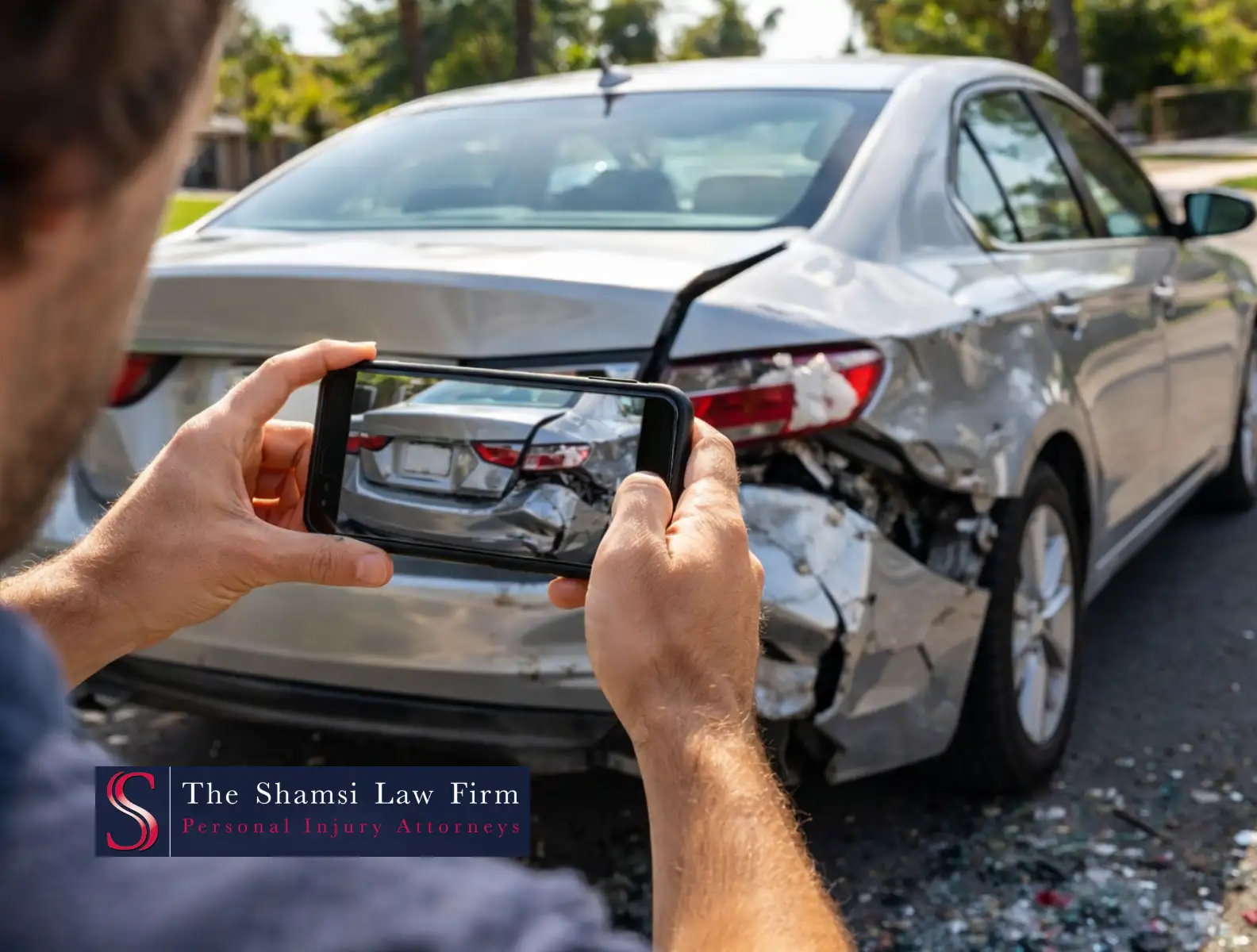
Evidence can disappear quickly after a hit and run. If you’re able, taking detailed photos or videos at the accident scene strengthens your insurance coverage options and supports claims under uninsured motorist coverage or underinsured motorist coverage.
Capture the following whenever possible:
- Vehicle damage from multiple angles
- Skid marks or debris from the collision
- Street signs or landmarks
- Weather and lighting conditions
- Your injuries, if visible
- The vehicle registration number from your own insured vehicle
If traffic or weather limits your ability to take photos, gather what you can safely. Written notes also help paint a clear picture for the insurance company, including where you were driving, when the crash happened, and how quickly the other driver left the scene.
If nearby businesses or homes have security cameras pointed toward the roadway, officers may request footage. In North Hollywood, many storefronts along major streets have cameras that record continuously. Eyewitness accounts can also support your version of events, particularly if someone saw the hit-and-run driver’s direction of travel.
Seek Prompt Medical Care Even If You Feel “Fine”
It’s common to feel shaken but physically okay after a hit-and-run accident. Adrenaline masks pain, and injuries like concussions, whiplash, and soft tissue trauma often develop gradually. Seeking medical care creates a record of your injuries and connects them to the hit-and-run accident.
Insurance companies review your treatment timeline when evaluating claims, so prompt care strengthens your position. Delays can lead them to question whether the crash caused your injuries. When you follow up quickly, you support claims under bodily injury coverage, uninsured motorist bodily injury, medical expenses, and medical bills.
If your injuries keep you away from work, document lost wages and any impact on daily life. These details help the insurance company understand the scope of harm caused by the collision, even when the responsible driver hasn’t been identified.
Notify Your Insurance Company and Review Your Coverage
After you leave the scene and address medical needs, contact your insurer to report the collision. You’re not required to provide a full detailed statement right away, but reporting the hit-and-run accident promptly meets the written notice requirements in most auto insurance policies.
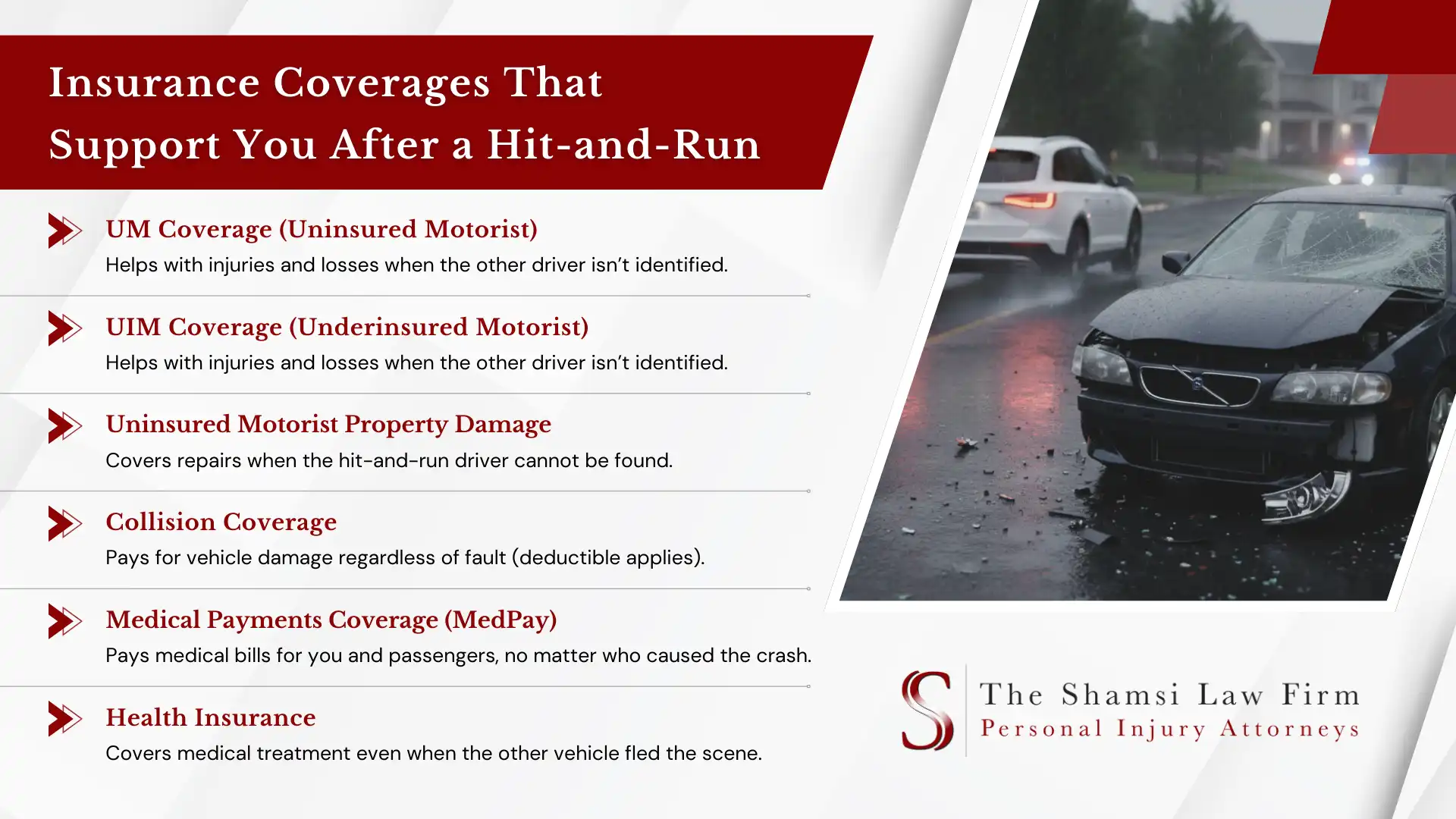
Your coverage determines the path forward when the at-fault party isn’t found. Many North Hollywood drivers rely on a combination of coverage types, including:
- Uninsured motorist coverage (UM coverage)
- Underinsured motorist coverage (UIM coverage)
- Uninsured motorist property damage
- Collision coverage
- Bodily injury coverage
- Liability coverage
- Auto liability insurance
California law requires insurers to offer uninsured motorist coverage, and many policies include it unless you rejected it in writing. This coverage applies when the responsible driver doesn’t have enough insurance or when the vehicle flees, leaving no policy information. UM and UIM coverage options also protect you when uninsured drivers or underinsured motorist drivers cause harm.
When you speak with the insurance company, keep your comments factual. Avoid speculation about fault or injuries until you’ve talked with a California hit-and-run lawyer or reviewed the police report. Insurance adjusters often ask questions designed to reduce liability limits or challenge claims for property damage and bodily injury.
How California Law Applies to Hit-and-Run Accidents
California law outlines what drivers must do after a collision, and those duties apply to property damage and injuries. When a driver leaves without stopping, officers refer to the California Vehicle Code to determine whether the situation involves a misdemeanor hit or felony hit, depending on the harm caused.
Under the California Vehicle Code, drivers who damage another vehicle must stop, share identifying information, and provide aid if someone is hurt. These duties apply on public and private roadways. Leaving the scene creates legal trouble for the responsible driver and exposes them to criminal charges that can include up to six months in a county facility for property damage cases, or steeper consequences when injuries occur.
Officers typically review:
- Injury details and the level of harm involved
- How quickly the hit-and-run driver left the scene
- Facts that determine misdemeanor hit or felony hit classification
- The vehicle code section that applies to the police report
- Evidence that may identify the responsible driver
This information helps the insurance company understand why the other driver is treated as the responsible party, even when officers haven’t located the vehicle yet.
California law also outlines financial responsibility requirements for motorists. Liability coverage, bodily injury coverage, and property damage requirements create minimum standards for insured vehicle owners. When a driver violates these standards and leaves the scene, their conduct shapes how an uninsured motorist claim in California moves forward and how UM or UIM coverage may support your losses.
What Happens When Officers Identify the Driver
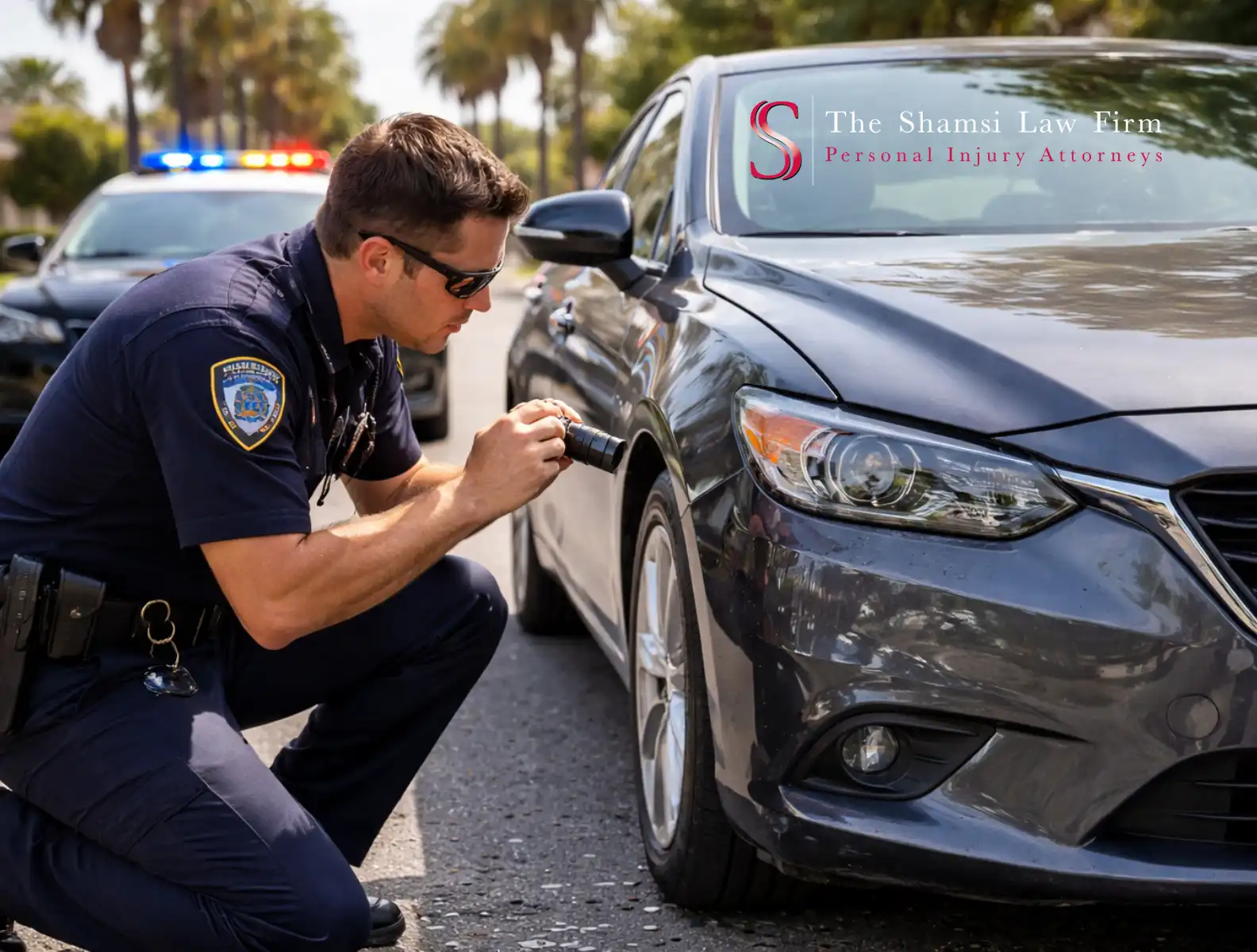
In some North Hollywood cases, officers locate the hit-and-run driver using license plate number fragments, eyewitness accounts, traffic cameras, or security cameras. If officers find the other vehicle, they look for physical contact markings that match your car, which strengthens the connection between the drivers involved.
When officers locate the responsible driver, several steps may follow:
- Criminal charges may be filed based on the severity of injuries.
- Statements are collected to determine how the crash happened.
- Insurance details are requested to evaluate coverage under the at-fault driver’s auto insurance policy.
- The police report is updated with new information, including whether more than one person witnessed the collision.
Once the at-fault party is identified, your insurance claims move in a different direction. The claim may involve the other driver’s liability coverage or bodily injury limits instead of relying solely on your UM coverage. If the at-fault driver doesn’t have enough insurance, your uninsured or underinsured motorist coverage may still apply.
Even when officers find the responsible driver, the claim process can take time. Written notice requirements, insurance claims reviews, and evaluations for lost wages, medical bills, and property damage all move forward independently of the criminal investigation.
How Insurance Claims Work When the Driver Isn’t Found
Unfortunately, many hit-and-run accidents in North Hollywood remain unsolved. In these cases, your own insurance policy becomes the primary source of coverage. Uninsured motorist coverage, underinsured motorist coverage, and collision coverage play the largest roles in compensating for losses in these types of accidents.
Your insurer reviews several details to determine how coverage applies:
- The police report and how the crash occurred
- Medical records documenting bodily injury
- Photos or videos of the accident scene
- Statements from witnesses
- Your auto policy limits and exclusions
Some claims also involve uninsured motorist property damage for repairing your vehicle. If you carry higher limits, your policy may cover portions of your medical expenses, lost income, and other losses created by the collision.
California policies sometimes include statutory exclusions, so reviewing your policy documents helps you spot items that influence your claim. In some situations, insurers review whether physical contact occurred between the vehicles. If the policy requires proof of contact, available photos, videos, and eyewitness accounts can help to support the claim. Collision coverage may apply when contact cannot be confirmed.

Common Obstacles in North Hollywood Hit-and-Run Claims
The uncertainty created by a hit-and-run accident introduces several challenges. Many North Hollywood drivers run into issues that delay or complicate the insurance process, such as:
Limited Information About the Other Vehicle
When the other driver leaves quickly, you may only have a brief look at the vehicle. Missing details about the color, type, or license plate number can slow down the investigation.
Disputes Over Medical Care
Insurance companies often question whether injuries were connected to the hit-and-run accident. Prompt evaluations and consistent follow-up visits help establish a clear timeline.
Questions About Coverage
Your insurer already knows which coverages you purchased, but they may ask questions to determine how your benefits apply after a hit and run accident. Details about physical contact, the accident scene, and eyewitness accounts help the adjuster determine which coverages apply and how your limits should be evaluated.
Concerns About Lost Income
Claims related to lost wages require documentation from your employer and medical providers. The insurer evaluates whether the hit-and-run accident caused those losses.
Damage Valuation
Property damage evaluations sometimes differ between the insurance company and auto repair professionals. Photos, receipts, and a written estimate help support your claim.
Injuries Affecting More Than One Person
If passengers or family members were hurt, multiple claims may be reviewed for bodily injury, total bodily injury limits, and medical expenses. Some insurers review whether one accident or multiple impacts occurred.
These challenges don’t stop your claim from moving forward, but preparing early can support a stronger resolution.
How Insurance Adjusters Evaluate Hit-and-Run Claims
Insurance claims reviewers look for evidence that supports your statement and confirms the extent of your losses. Adjusters often request:
- Copies of the police report
- Medical records showing bodily injury
- Photos of property damage
- A list of medical bills and receipts
- Proof of lost income
- Policy documents showing liability limits and coverage types
Some adjusters also analyze vehicle repair records to confirm the severity of the collision. If the insurer suspects more than one vehicle may have been involved or questions the mechanism of injury, they may review accident reconstruction experts’ assessments.
The adjuster determines whether uninsured motorist coverage, uninsured motorist bodily injury, uninsured motorist property damage, or liability coverage should apply. If the responsible driver isn’t found, they may rely exclusively on your UM coverage and UIM coverage to resolve the claim.
Your Right to Pursue Compensation Under California Law
California allows injured drivers to pursue compensation for harm caused by negligent motorists. Even when the responsible driver isn’t identified, state law provides options through insurance coverage. Claims may include compensation for:
- Medical expenses
- Lost income
- Property damage
- Long-term impairments connected to the crash
- Pain caused by the accident
These options help you move forward even when the responsible driver leaves the scene, and they allow UM coverage, UIM coverage, and other insurance claims to support your recovery under California law.

Frequently Asked Questions
Q: Do I need a police report for a hit-and-run accident?
A: Yes. Insurance companies require a police report for UM coverage and uninsured motorist property damage claims. Officers also document key information needed for the investigation.
Q: Will uninsured motorist coverage apply if the responsible driver isn’t found?
A: In many cases, yes. UM coverage and UIM coverage support claims when the hit-and-run driver cannot be identified. Review your auto insurance policy to confirm your limits.
Q: What if the insurance company questions my injuries?
A: Medical records, imaging results, and follow-up notes support claims for bodily injury, medical expenses, and lost wages. Seeking medical care quickly strengthens your documentation.
Q: How long does the process take?
A: Claim timelines vary. Some issues resolve within weeks, while others take longer if insurers request extensive documentation or if medical care is ongoing.
Q: What if I don’t have UM or UIM coverage? Am I out of options?
A: Not entirely. If officers locate the hit-and-run driver, you may still pursue a claim through that driver’s liability insurance. If the driver isn’t found, collision coverage can help with vehicle repairs, and Med-Pay or health insurance can assist with medical care. These options don’t replace UM or UIM coverage, but they can reduce your out-of-pocket losses while the investigation continues.
If Your Insurance Company Isn’t Cooperating, I’m Here to Listen
Hit-and-run accidents place you in a difficult position because the responsible driver isn’t available to answer questions or provide insurance information. That leaves you working through your own insurer for coverage, and the process isn’t always straightforward.
You may have already been asked for more documentation than you expected, or you’re unsure whether UM coverage, UIM coverage, or bodily injury coverage applies to your situation. Some people reach a point where the insurance company delays their claim or questions the extent of their injuries, medical bills, lost income, or property damage.
I’m North Hollywood hit-and-run attorney, Sean Shamsi, and I work with North Hollywood residents dealing with the same insurance obstacles you may be facing now. When you contact The Shamsi Law Firm, I review how the collision happened, how the police report describes the drivers involved, and which insurance coverage options support your claim under California law. You speak with me directly, and I explain what you can expect as your claim moves forward.
If you’ve been running into issues with your insurance company, my office is ready to talk with you. Schedule your free, no-obligation consultation at (818) 764-7640(818) 764-7640 , or complete the confidential online form on our website. You pay no attorney fees unless compensation is recovered on your behalf.
I fight the insurance companies, so you don’t have to!
Copyright © 2026. The Shamsi Law Firm, APC. All rights reserved.
The information in this blog post (“post”) is provided for general informational purposes only and may not reflect the current law in your jurisdiction. No information in this post should be construed as legal advice from the individual author or the law firm, nor is it intended to be a substitute for legal counsel on any subject matter. No reader of this post should act or refrain from acting based on any information included in or accessible through this post without seeking the appropriate legal or other professional advice on the particular facts and circumstances at issue from a lawyer licensed in the recipient’s state, country, or other appropriate licensing jurisdiction.
The Shamsi Law Firm, APC
4605 Lankershim Blvd., Suite 840
North Hollywood CA 91602
(818) 764-7640(818) 764-7640
https://shamsilaw.com/
No Fee Unless You Win
Questions or Schedule An Appointment? Call Us: (818) 764-7640
Questions or Schedule An Appointment? Call Us:
(818) 764-7640
Related Blog Posts

Should I Get a Lawyer After a Car Accident in North Hollywood, California?
You didn’t plan for this. One moment you were driving through North Hollywood, and the next you were dealing with a car crash, damage to your vehicle, and a flood…

The Essential Guide to Handling an Uber Accident as a Passenger
In the digital age, ridesharing services like Uber have become a staple of convenience, offering a swift tap-of-the-app solution to our transportation needs. However, this convenience can quickly become a…

Can You Sue for Fire Damages After the LA Wildfires?
The devastation caused by wildfires in Los Angeles leaves many homeowners, business owners, and renters wondering what legal options they have to recover their losses. While some fires occur naturally,…

What Is the Minimum Auto Insurance Coverage in California?
On January 1, 2025, California drivers saw a significant change in the state’s auto insurance requirements. For the first time in more than 50 years, the minimum liability limits increased,…
We Will Fight For You
Our Locations
Are you struggling and need help from a lawyer? Contact us for a free consultation.
Get a Free Consultation
Required Fields*
Your Information Is Safe With Us
By submitting, you agree to receive text messages at the provided number from The Shamsi Law Firm . Message frequency varies, and standard message and data rates may apply. You have the right to OPT-OUT receiving messages at any time. To OPT-OUT, reply “STOP” to any text message you receive from us. Reply HELP for assistance.
We respect your privacy. The information you provide will be used to answer your question or to schedule an appointment if requested.
